Atrial Fibrillation (AF)
A supraventricular tachyarrhythmia with irregular, disorganized electrical activity and ineffective atrial contraction
Classification
Paroxysmal AF
- Episodes lasting >30 seconds but <7 days
- Often <48 hours
- Self-terminating and recurrent
Persistent AF
- Episodes lasting >7 days
- Requires pharmacological/electrical cardioversion
- Unlikely to self-terminate
Permanent AF
- Fails cardioversion or relapses within 24 hours
- Usually >1 year duration
- Cardioversion not indicated/attempted
Pathophysiology
- Associated with electrophysical/structural atrial abnormalities
- Triggers are rapidly firing foci (commonly in pulmonary veins)
- Creates propagating wavelets and re-entrant circuits
- AV node conducts irregular impulses → irregular ventricular rhythm
- Untreated ventricular rate typically 160-180 bpm (slower in elderly)
- Sustained AF causes atrial structural remodeling (fibrosis)
Causes
Cardiac Conditions
- Hypertension
- Coronary artery disease
- Myocardial infarction
- Heart failure
- Valvular disease (especially rheumatic)
- Congenital heart disease
- Cardiomyopathies
- Pericarditis
Non-Cardiac Conditions
- Hyperthyroidism
- Pulmonary embolism
- Acute infection
- Electrolyte imbalances
- Malignancy (lung, metastatic)
- Diabetes mellitus
Lifestyle Factors
- Excessive alcohol ("Holiday heart")
- Obesity
- Smoking
- High caffeine intake
- Certain medications (thyroxine, bronchodilators)
PIRATES Mnemonic for Secondary Causes
- Pulmonary embolism
- Ischemia
- Respiratory disease
- Atrial enlargement/myxoma
- Thyroid disease
- Ethanol
- Sepsis/Sleep apnea
Complications
Stroke risk is similar across all AF classifications (paroxysmal, persistent, permanent)
Stroke & Thromboembolism
- Main complication of AF
- Anticoagulation reduces risk by ~2/3
- Due to stasis in left atrial appendage
Heart Failure
- Ineffective ventricular filling
- Cardiac output reduced by 10-20%
- Can decompensate existing HF
Other Complications
- Tachycardia-induced cardiomyopathy
- Critical cardiac ischemia
- Increased mortality (correlates with CV disease severity)
Diagnosis
Suspected AF Presentation
- Irregular pulse ± symptoms:
- Breathlessness
- Palpitations
- Chest discomfort
- Syncope/dizziness
- Reduced exercise tolerance
- Stroke/TIA symptoms
ECG Findings
- Absent P-waves
- Chaotic baseline (fibrillatory waves)
- Irregularly irregular ventricular rate
- Rate typically 160-180 bpm (may be lower)
- Normal QRS complexes (unless conduction defect)
Additional Testing
Paroxysmal AF
- 24-hour Holter monitor (if episodes <24h apart)
- Event recorder (if episodes >24h apart)
- 7-day Holter as alternative
Underlying Causes
- Echocardiogram (structural heart disease)
- Thyroid function tests
- Electrolytes (K+, Mg++)
- CXR (lung pathology)
Differential Diagnosis
| Condition | Key Features |
|---|---|
| Atrial flutter | Saw-tooth atrial pattern on ECG |
| Atrial/ventricular ectopics | Irregular pulse but regular underlying rhythm |
| Sinus tachycardia | Regular rhythm >100 bpm with P-waves |
| SVTs | Regular narrow-complex tachycardia |
| Multifocal atrial tachycardia | Irregular rhythm with ≥3 P-wave morphologies |
Acute Management
Hemodynamically Unstable AF
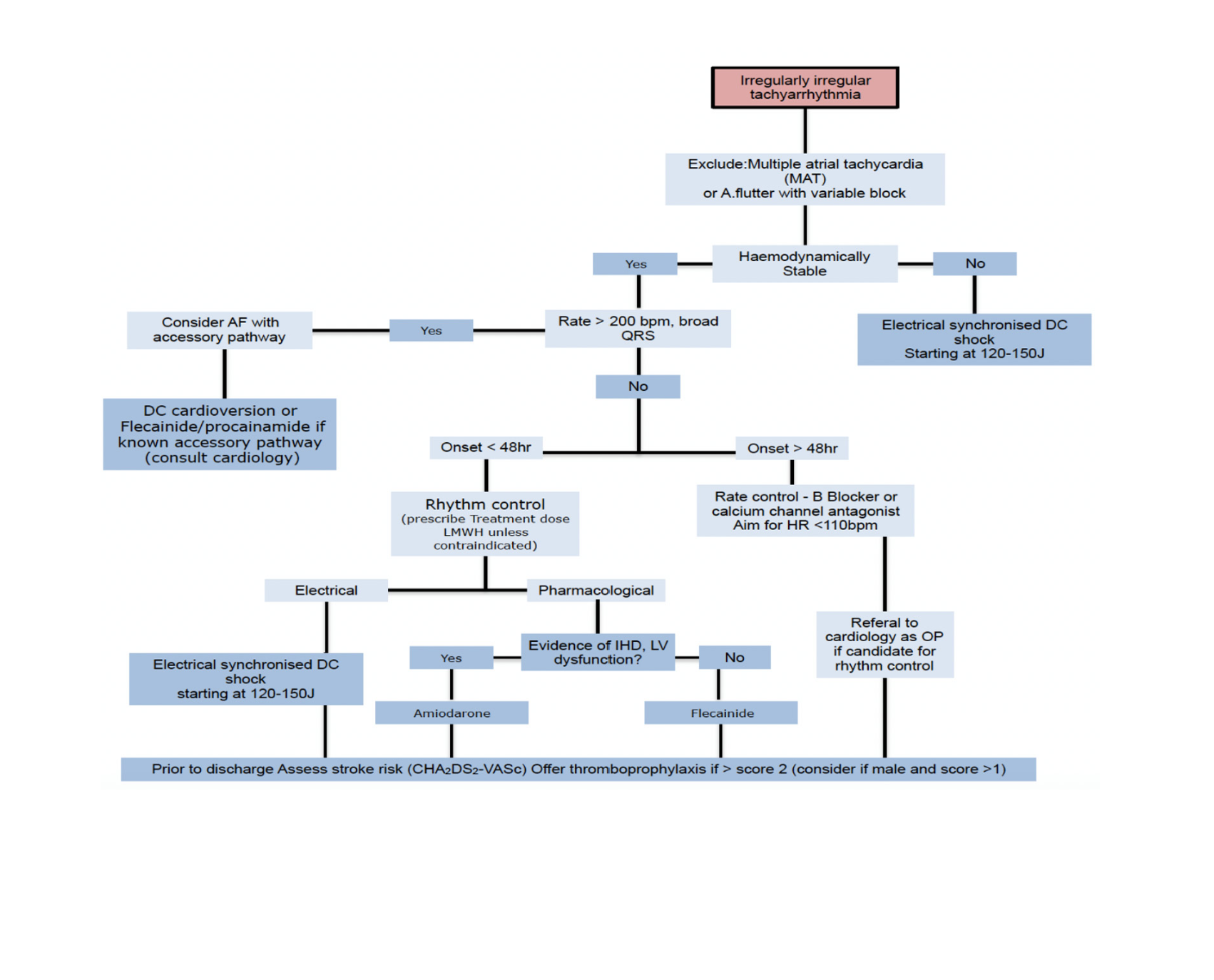
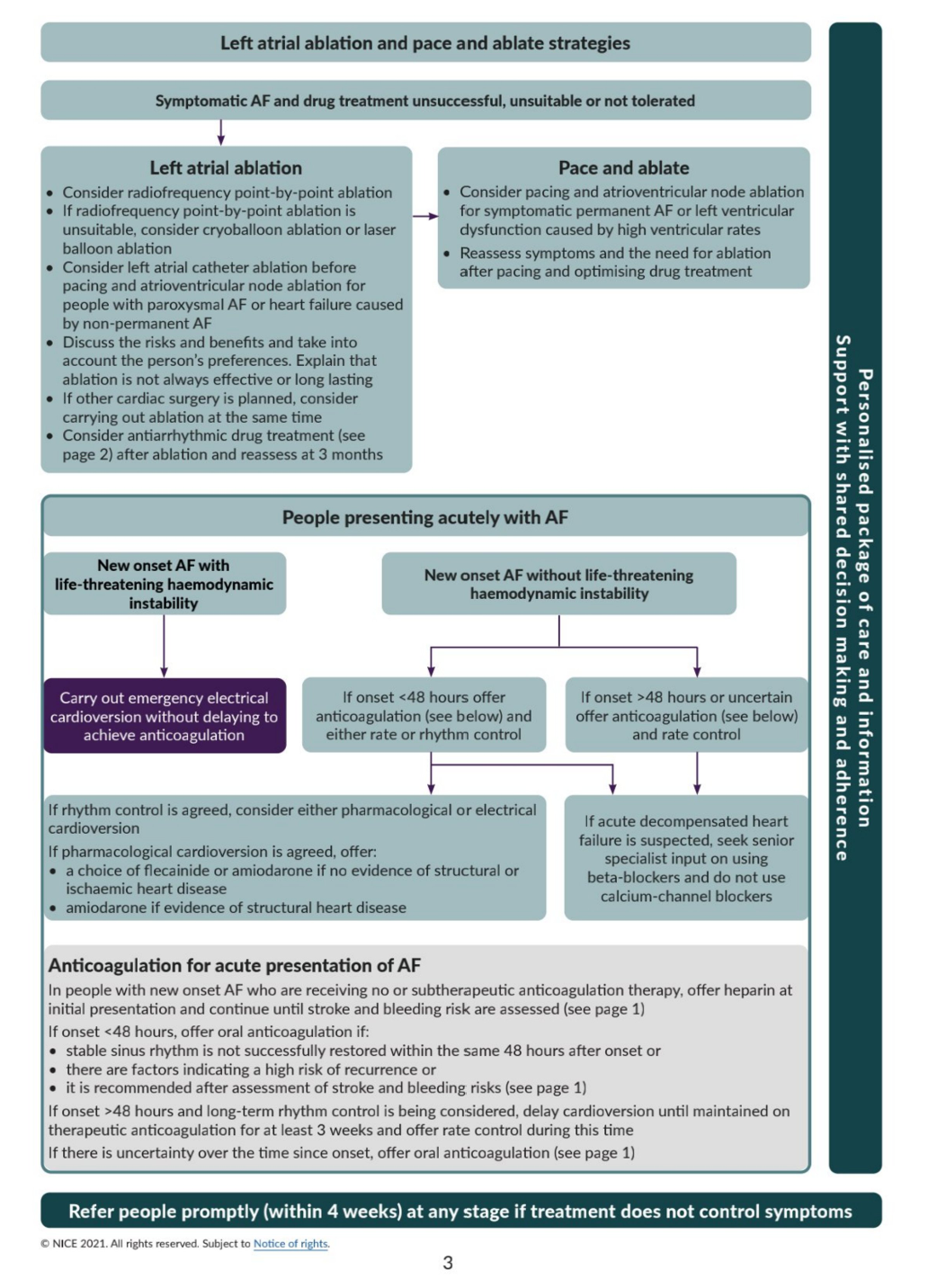
- Emergency electrical cardioversion (120-150J synchronized)
- Indications:
- Shock
- Syncope/reduced consciousness
- Acute heart failure
- Myocardial ischemia
- Do not delay for anticoagulation
Recent-onset AF (<48 hours)
Pharmacological Cardioversion
- No structural/ischemic heart disease: Flecainide
- Structural heart disease: Amiodarone
Electrical Cardioversion
- Synchronized DC shock (120-150J)
- Preferred if >48 hours duration
Rate Control Strategy
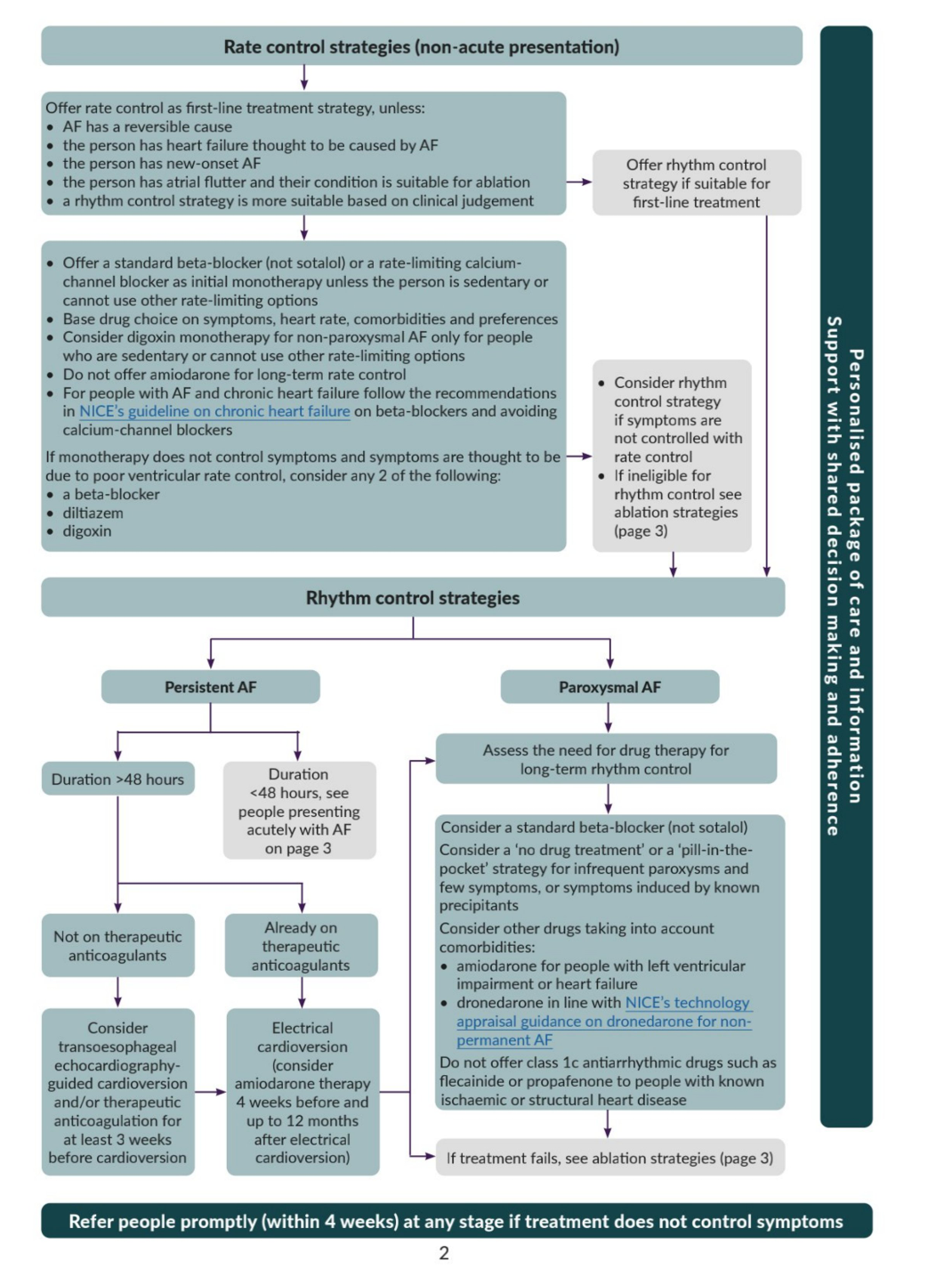
First-line for most AF patients unless:
- Reversible cause
- HF primarily caused by AF
- New onset AF (<48h)
- Rhythm control more suitable clinically
| Medication | Notes |
|---|---|
| Beta-blockers (metoprolol) | First-line for most patients |
| Rate-limiting CCBs (diltiazem) | Alternative first-line |
| Digoxin | Only for sedentary patients with non-paroxysmal AF |
Anticoagulation
For AF >48h or uncertain duration: anticoagulate for ≥3 weeks before cardioversion
CHA2DS2-VASc Score
| Risk Factor | Points |
|---|---|
| Congestive HF/LV dysfunction | 1 |
| Hypertension | 1 |
| Age ≥75 | 2 |
| Diabetes | 1 |
| Stroke/TIA | 2 |
| Vascular disease | 1 |
| Age 65-74 | 1 |
| Female sex | 1 |
Anticoagulation guidelines:
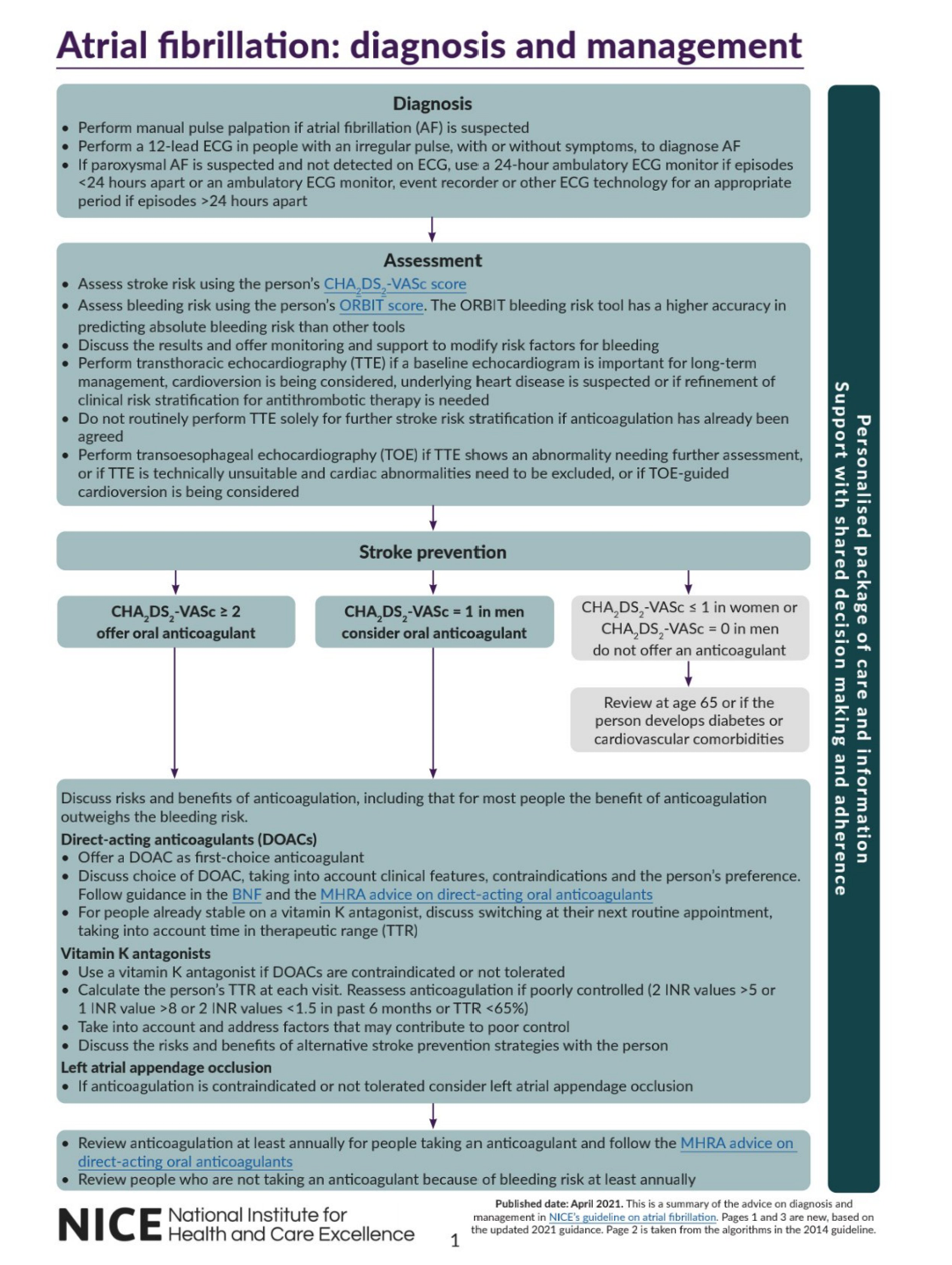
- Consider for males with score ≥1
- Offer for score ≥2
- Options: DOACs (apixaban, rivaroxaban, dabigatran) or warfarin
ORBIT Bleeding Risk Score
| Risk Predictor | Points |
|---|---|
| Older age (>74 years) | 1 |
| Reduced hemoglobin/Anemia (below normal range)Low Hb (M<13/F<12 g/dL) | 2 |
| Bleeding history (GI bleeding, intracranial bleeding, or hemorrhagic stroke) | 2 |
| Insufficient kidney function (GFR <60 mL/min/1.73m²) | 1 |
| Treatment with antiplatelet agents | 1 |
Interpretation
- Low risk: 0-2 points
- Intermediate risk: 3 points
- High risk: ≥4 points
Use the ORBIT score to assess bleeding risk when considering anticoagulation for AF patients.
Long-term Management
Rhythm Control
- For:
- Reversible cause
- HF caused/worsened by AF
- Symptoms persist despite rate control
- Options:
- Electrical cardioversion (preferred if >48h)
- Amiodarone (4 weeks before to 12 months after cardioversion)
- Beta-blockers first-line for maintenance
Ablation Strategies
Catheter Ablation
- Offer for paroxysmal AF if drugs fail/unsuitable
- Consider for persistent AF
AV Node Ablation + Pacing
- For permanent AF with:
- Symptoms from high ventricular rates
- LV dysfunction from rate-related cardiomyopathy