Introduction
Fever represents a regulated rise in body temperature, and an infant or child is generally considered to have a fever if their temperature is 38°C or higher in the literature. Measured and reported parental perception of fever should be accepted as a valid indicator of fever.
Measuring Temperature
- In infants under the age of 4 weeks, measure body temperature with an electronic thermometer in the axilla.
- In children aged 4 weeks to 5 years, measure body temperature by one of the following methods:
- Electronic thermometer in the axilla
- Chemical dot thermometer in the axilla
- Infra-red tympanic thermometer
- Do not routinely use the oral and rectal routes to measure the body temperature of children aged 0–5 years.
NICE Traffic Light System
First, healthcare professionals should identify and manage any immediately life-threatening features, including compromise of the airway, breathing or circulation, and decreased level of consciousness.
If no life-threatening features are present, assess children with feverish illness for the presence or absence of symptoms and signs that can be used to predict the risk of serious illness using the traffic light system.
Key assessments to perform: Measure and record temperature, heart rate, respiratory rate and capillary refill time as part of the routine assessment of a child with fever. Measure the blood pressure of children with fever if the heart rate or capillary refill time is abnormal and the facilities to measure blood pressure are available.
Assess for dehydration: Look for prolonged capillary refill time, abnormal skin turgor, abnormal respiratory pattern, weak pulse, cool extremities.
| Assessment | Green (low risk) | Amber (intermediate risk) | Red (high risk) |
|---|---|---|---|
| Colour | • Normal colour of skin, lips and tongue | • Pallor (reported by parent/carer) | • Pale, mottled, ashen or blue |
| Behaviour |
• Responding normally to social cues. • Content, smiling. • Stays awake or awakens quickly. • Strong normal cry or not crying. |
• Not responding normally to social cues. • Waking only with prolonged stimulation. • Decreased activity. • Not smiling. |
• No response to social cues. • Appears ill to a healthcare professional. • Unable to rouse or if roused does not stay awake. • Weak, high-pitched, or continuous crying. |
| Respiratory | Normal |
• Nasal flaring. • Oxygen saturation ≤ 95% in air. Crackles in chest. • Tachypnoea: o < 6 months: RR > 60 o 6 - 12 months: RR > 50 o > 1 year RR > 40 |
• Grunting. • Moderate or severe chest indrawing. • Tachypnoea o RR > 60 |
| Hydration and circulation |
• Normal skin and eyes. • Moist mucous membranes. |
• Dry mucous membrane. • Poor feeding in infants. • CRT ≥ 3 seconds. • Reduced urine output. • Tachycardia: o < 1 year: HR > 160 o 1 - 2 years: HR > 150 o 2 - 5 years: HR > 140 |
• Reduced skin turgor. |
| Other | • None of the amber or red symptoms or signs. |
• Fever for ≥ 5 days. • Rigors • Temp ≥ 39°C in children 3 - 6 months. • Swelling of limb or joint. • Non-weight-bearing/not using an extremity. |
• Temp ≥ 38°C in children 0 - 3 months. • Non-blanching rash. • Bulging fontanelle. • Neck stiffness. • Status epilepticus. • Focal neurological signs. • Focal seizures. |
Symptoms and Signs Suggestive of Specific Causes
| Diagnosis to be considered | Symptoms and signs in conjunction with fever |
|---|---|
| Meningococcal disease |
• Non blanching rash, particularly with one or more of the following: o An ill looking child o Lesions larger than 2mm in diameter (purpura) o CRT ≥ 3 seconds o Neck stiffness |
| Bacterial meningitis |
• Neck stiffness • Bulging fontanelle • Decreased level of consciousness • Convulsive status epilepticus |
| Herpes simplex encephalitis |
• Focal neurological signs • Focal seizures • Decreased level of consciousness |
| Pneumonia |
• Tachypnoea • Crackles in the chest • Nasal flaring • Chest drawing • Cyanosis • Oxygen saturation ≤ 95% |
| Urinary tract infection (< 3 months) |
• Vomiting • Poor feeding • Lethargy • Irritability • Abdominal pain or tenderness • Urinary frequency or dysuria |
| Septic arthritis/osteomyelitis |
• Swelling of a limb or a joint • Not using an extremity • Non-weight bearing |
| Kawasaki disease |
• Fever for 5 days or longer plus some of the following: o Bilateral conjunctival injection without exudate o Erythema and cracking of lips; strawberry tongue; or erythema of oral and pharyngeal mucosa o Oedema and erythema in the hands and feet o Polymorphous rash o Cervical lymphadenopathy |
Management of the Feverish Child
In the prehospital setting:
- If there are any immediately life-threatening features, including compromise of the airway, breathing, or circulation, or decreased level of consciousness, should be referred immediately for emergency medical care.
- Children with any 'red' features but who are not considered to have an immediately life-threatening illness should be referred urgently to the care of a paediatric specialist.
- If any 'amber' features are present and no diagnosis has been reached, provide parents or carers with a 'safety net' or refer to specialist paediatric care for further assessment.
- Children with 'green' features and none of the 'amber' or 'red' features can be cared for at home with appropriate advice for parents and carers, including advice on when to seek further attention from the healthcare services.
In the hospital setting:
Children younger than 3 months with fever:
- Perform FBC, CRP, blood culture, urine testing for UTI, chest x-ray (if respiratory signs are present), stool culture (if diarrhoea is present)
- Perform lumbar puncture in infants younger than 1 month and in infants aged 1 - 3 months who appear unwell or who have a WCC < 5 x 10⁹/L or > 15 x 10⁹/L
- Give parenteral antibiotics to:
- infants younger than 1 month
- infants aged 1 - 3 months who appear unwell
- infants aged 1 - 3 months who have a WCC < 5 x 10⁹/L or > 15 x 10⁹/L
- When parenteral antibiotics are indicated for infants younger than 3 months of age, a third-generation cephalosporin (for example cefotaxime or ceftriaxone) should be given plus an antibiotic active against listeria (for example, ampicillin or amoxicillin).
Children aged 3 months or older with fever without apparent source:
One or more 'red' features
- Perform FBC, CRP, blood culture, urine testing for UTI
- Consider lumbar puncture, chest x-ray, serum electrolyte and blood gas, as guided by clinical assessment
One or more 'amber' features
- Perform urine testing for UTI, FBC, CRP, blood cultures
- Consider LP for children younger than 1 year
- Consider chest x-ray in a child with a fever greater than 39°C and WBC greater than 20 × 109/litre.
Green features
- Perform urine testing for UTI and assess for symptoms and signs of pneumonia
- Do not routinely perform blood tests and chest x-rays in children with fever who have no features of serious illness
In children aged 3 months or older with fever without apparent source, a period of observation in hospital (with or without investigations) should be considered as part of the assessment to help differentiate non-serious from serious illness. When a child has been given antipyretics, do not rely on a decrease or lack of decrease in temperature at 1–2 hours to differentiate between serious and non-serious illness.
Immediate treatment for children of all ages
- Children with fever and shock presenting to specialist paediatric care or an emergency department should be:
- given an immediate intravenous fluid bolus of 10 ml/kg; the initial fluid should normally be 0.9% sodium chloride
- actively monitored and given further fluid boluses as necessary.
- Give immediate parenteral antibiotics to children with fever presenting to specialist paediatric care or an emergency department if they are:
- shocked
- unrousable
- showing signs of meningococcal disease
- Immediate parenteral antibiotics should be considered for children with fever and reduced levels of consciousness.
- In a child presenting to hospital with a fever and suspected serious bacterial infection, requiring immediate treatment, antibiotics should be directed against Neisseria meningitidis, Streptococcus pneumoniae, Escherichia coli, Staphylococcus aureus and Haemophilus influenzae type b. When parenteral antibiotics are indicated, a third-generation cephalosporin (for example, cefotaxime or ceftriaxone) should be given, until culture results are available. For children younger than 3 months, an antibiotic active against listeria (for example, ampicillin or amoxicillin) should also be given.
- Give intravenous aciclovir to children with fever and symptoms and signs suggestive of herpes simplex encephalitis.
- Oxygen should be given to children with fever who have signs of shock or oxygen saturation (SpO2) of less than 92% when breathing air. Treatment with oxygen should also be considered for children with an SpO2 of greater than 92%, as clinically indicated.
Antipyretic interventions
- Antipyretic agents do not prevent febrile convulsions and should not be used specifically for this purpose.
- Consider using either paracetamol or ibuprofen in children with fever who appear distressed.
- Do not use antipyretic agents with the sole aim of reducing body temperature in children with fever.
- When using paracetamol or ibuprofen in children with fever:
- continue only as long as the child appears distressed
- consider changing to the other agent if the child's distress is not alleviated
- do not give both agents simultaneously
- only consider alternating these agents if the distress persists or recurs before the next dose is due.
Fever in Under 5 Years - Sepsis Risk Stratification
February 2024 Guidelines
Life-threatening Features of Illness in Children
Any immediately life-threatening features, including compromise of the airway, breathing or circulation, and decreased level of consciousness. Think could this be sepsis? If so, follow sepsis guidelines.
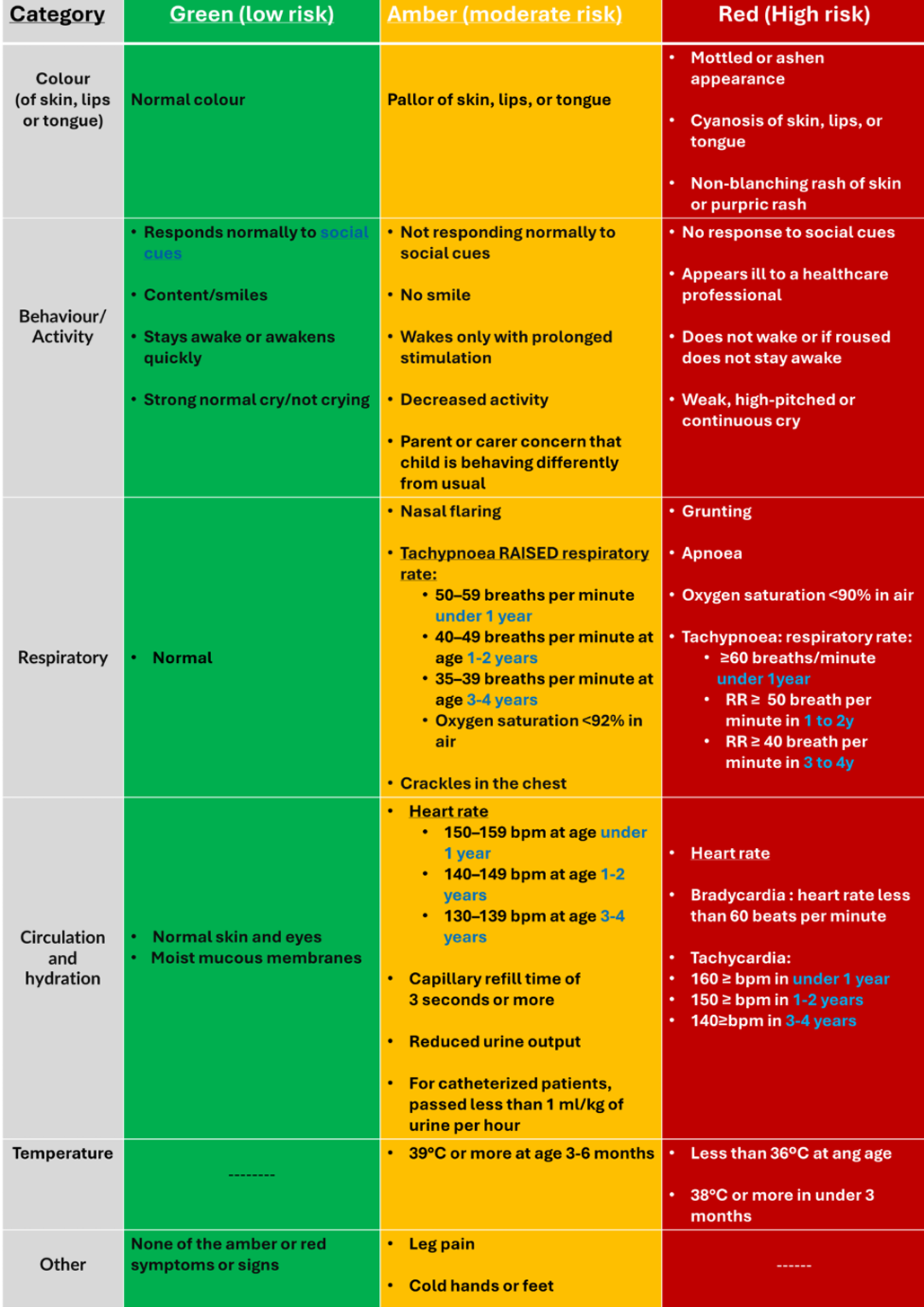
Assessment of Risk of Serious Illness
Use traffic light system to predict the risk of serious illness.
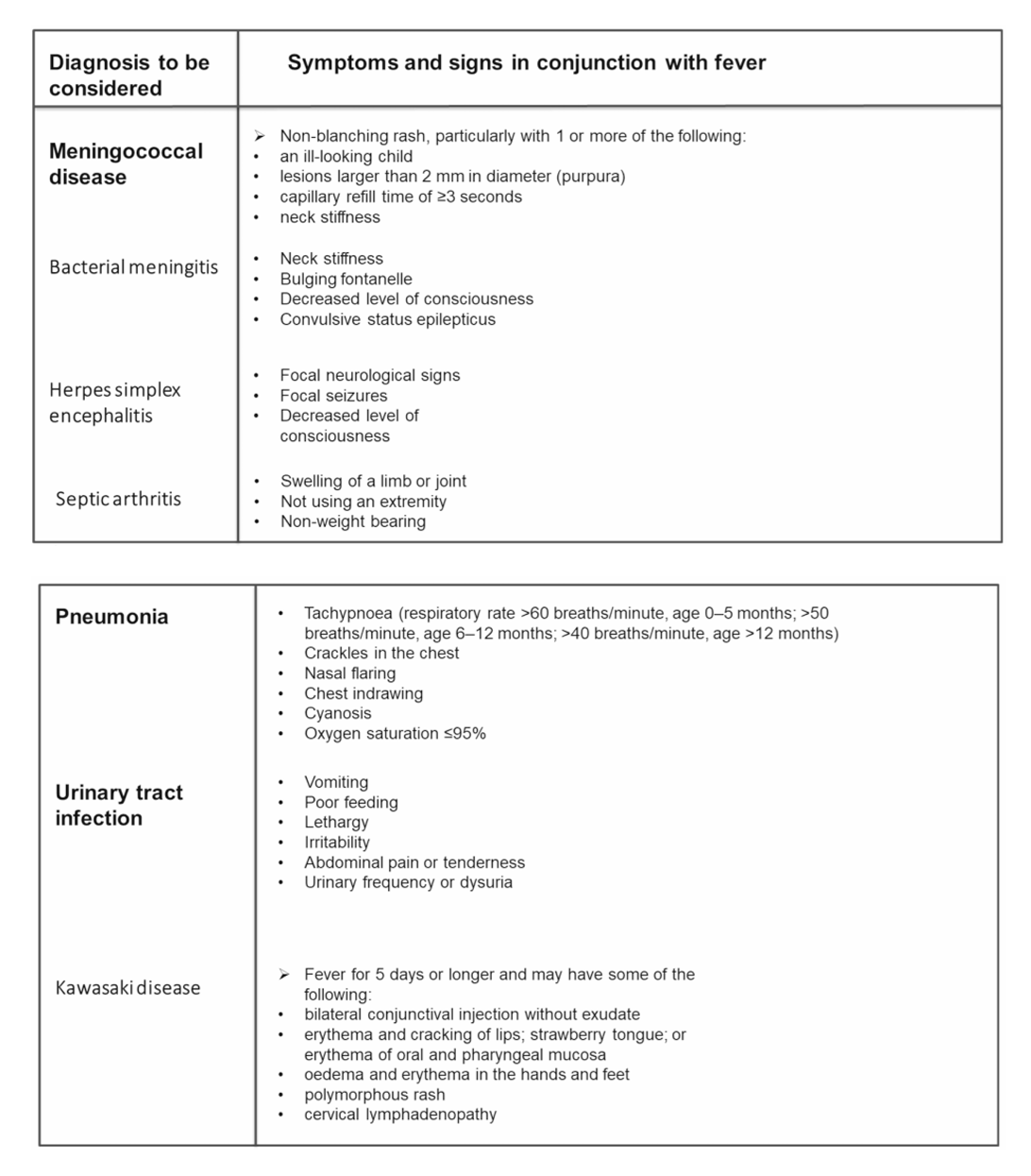
Symptoms and Signs of Specific Illnesses
Look for a source of fever and check for the presence of symptoms and signs that are associated with specific diseases.
Investigation (Out of Hospital Setting)
For children under 5 years by the non-paediatric practitioner (healthcare professional working in primary care or in general emergency department):
- Children with symptoms and signs suggesting pneumonia who are not admitted to hospital should not routinely have a chest X-ray.
- Test urine in children with fever as recommended in urinary tract infection in under 16s.
- When a child has been given antipyretics, do not rely on a decrease or lack of decrease in temperature to differentiate between serious and non-serious illness.
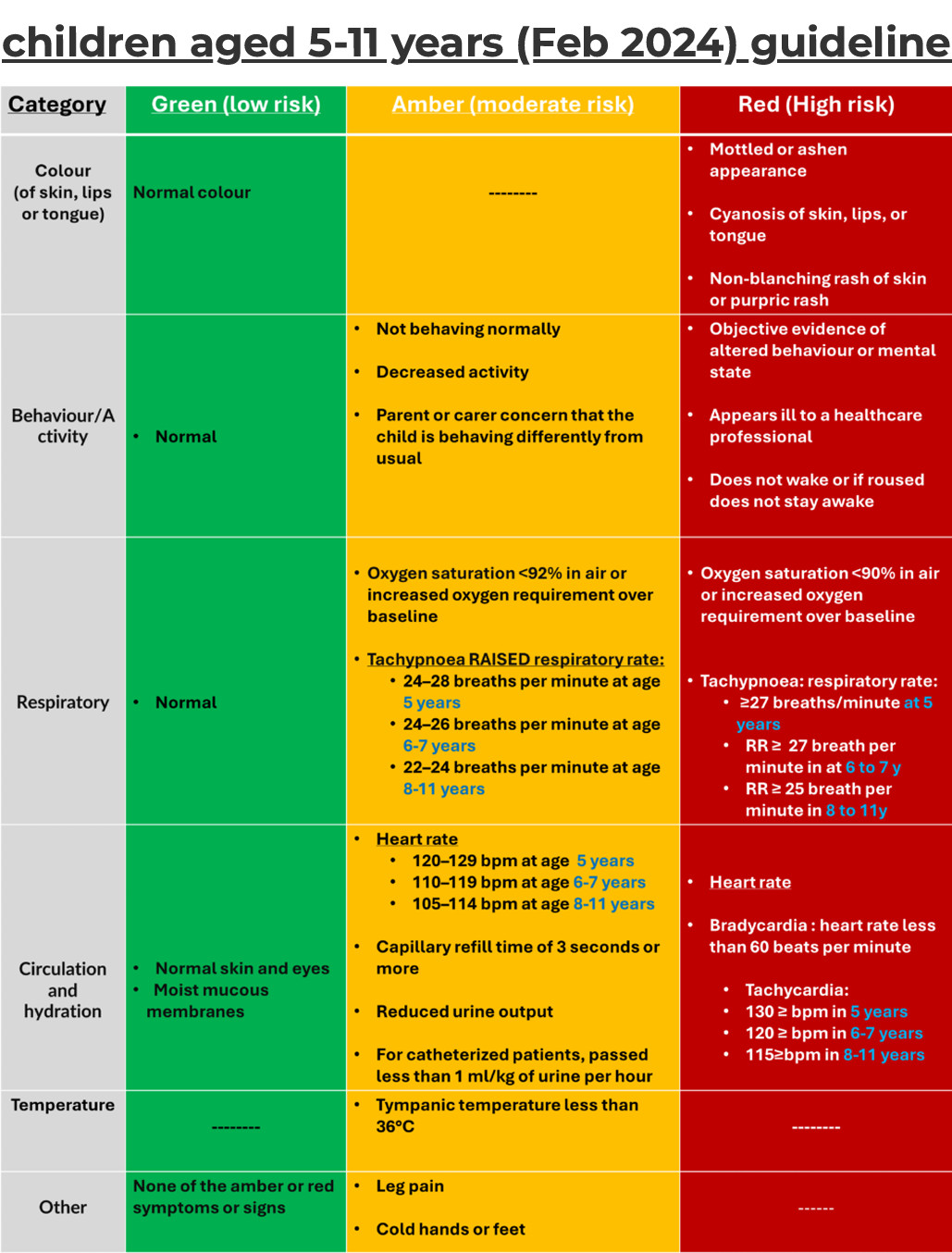
Sepsis Risk Stratification in Different Age Groups
- Sepsis risk stratification and assessment in children aged 5-11 years (Feb 2024) guideline
- Sepsis risk stratification and assessment in children aged 12-15 years, people aged over 16 years, people who are currently or recently pregnant (Feb 2024) guideline
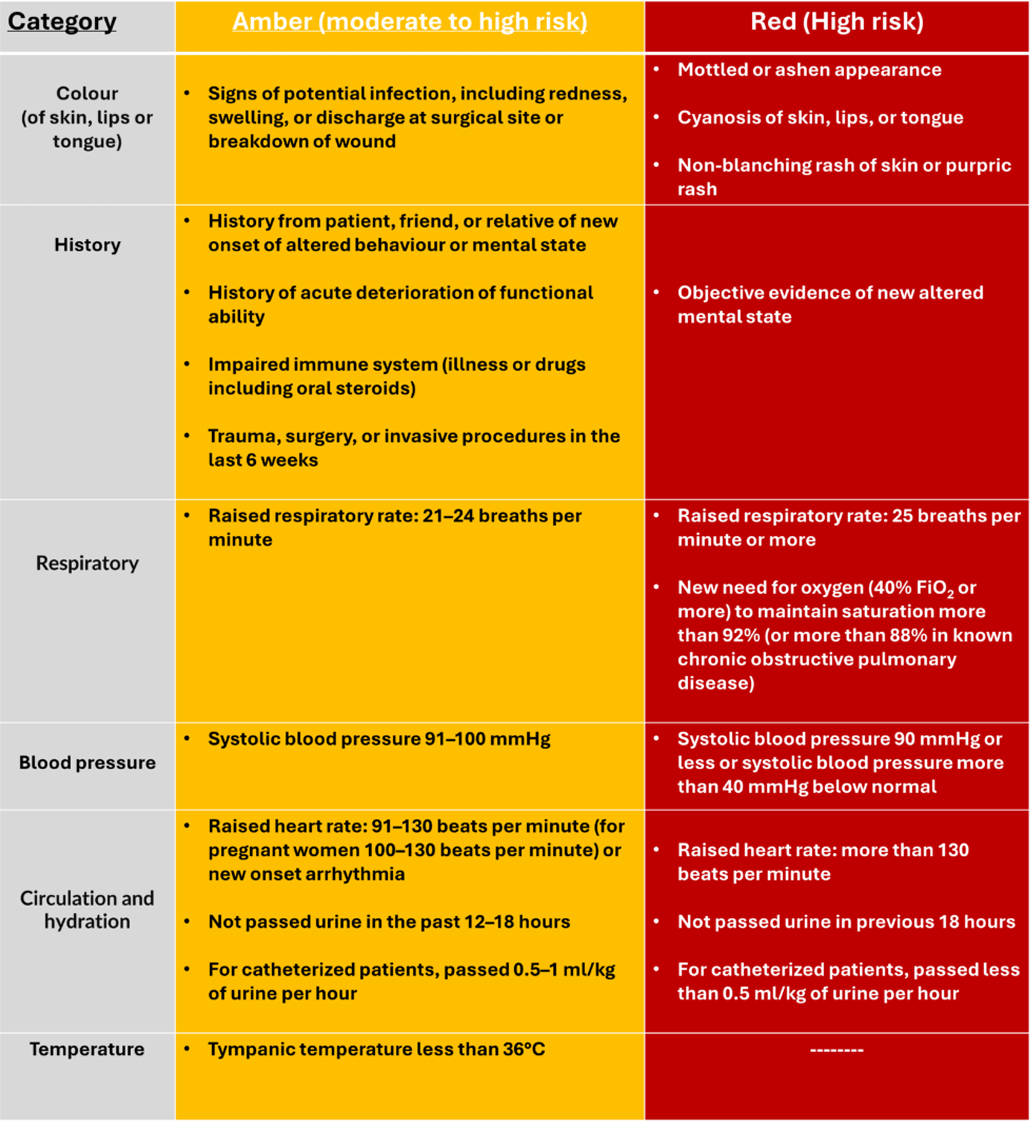
Management in Out of Hospital - Children Under 5 Years
(Healthcare community, school, workplace, home)
Child with green light feature (low risk)
Discharge with appropriate advice for parents, carers and advise on when to seek further attention from healthcare service.
If any Amber (moderate) risk features are present and no diagnosis has been reached
Provide parents or carers with a 'safety net' or refer to specialist paediatric care for further assessment. The safety net should be 1 or more of the following:
- Providing the parent or carer with verbal and/or written information on warning symptoms and how further healthcare can be accessed.
- Arranging further follow-up at a specified time and place.
- Liaising with other healthcare professionals, including out-of-hours providers, to ensure direct access for the child if further assessment is required.
Children with any 'red' features
Children with any 'red' features but who are not considered to have an immediately life-threatening illness should be referred urgently to the care of a paediatric specialist.
Children whose symptoms or combination of symptoms and signs suggest an immediately life-threatening illness (compromise of the airway, breathing or circulation, and decreased level of consciousness) should be referred immediately for emergency medical care by the most appropriate means of transport (ambulance).
Key Points
Green light
Discharge with appropriate advice
Amber light
Discharge with safety net or refer to paediatrician
Red light
Urgently refer to paediatric
Life threatening
Urgent referral for emergency care
Management in Out of Hospital - Children Aged 5-17 Years
(Healthcare community, school, workplace, home)
Green light
Discharge with appropriate advice
Amber light
Can definitive condition be diagnosed and treated in out of hospital setting?
- If yes: Treat definitive condition, access medical care and/or provide information to safety net.
- If not: Urgent referral to emergency care (which has resuscitation facility).
Aged 5-17 years and impaired immune system and any moderate to high risk criteria met, treat as high risk.
Red light
Urgent referral to emergency care (which has resuscitation facility).
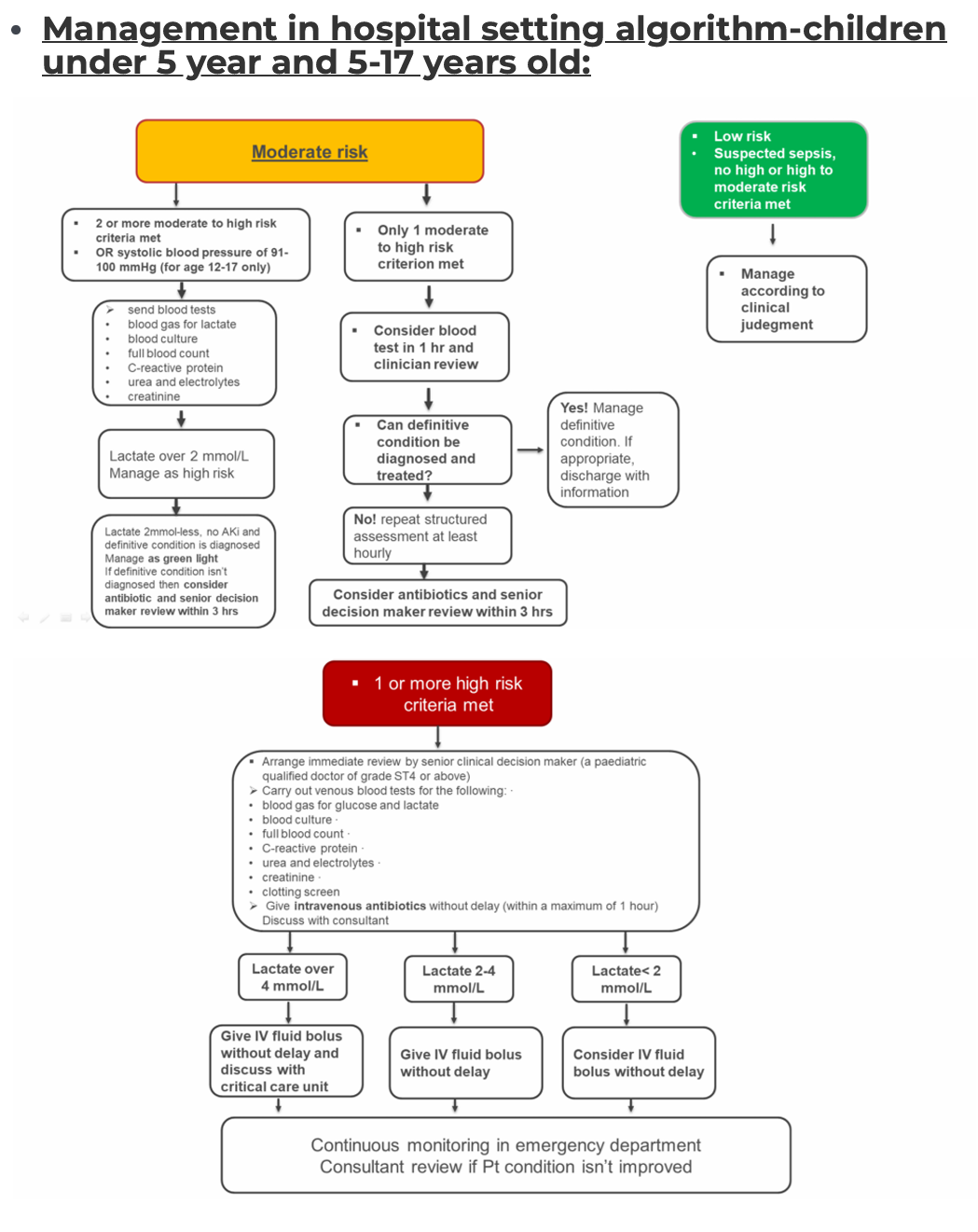
Management in Hospital Setting Algorithm
For children under 5 years and 5-17 years old.