Maternal Arrest Summary

Key Principles

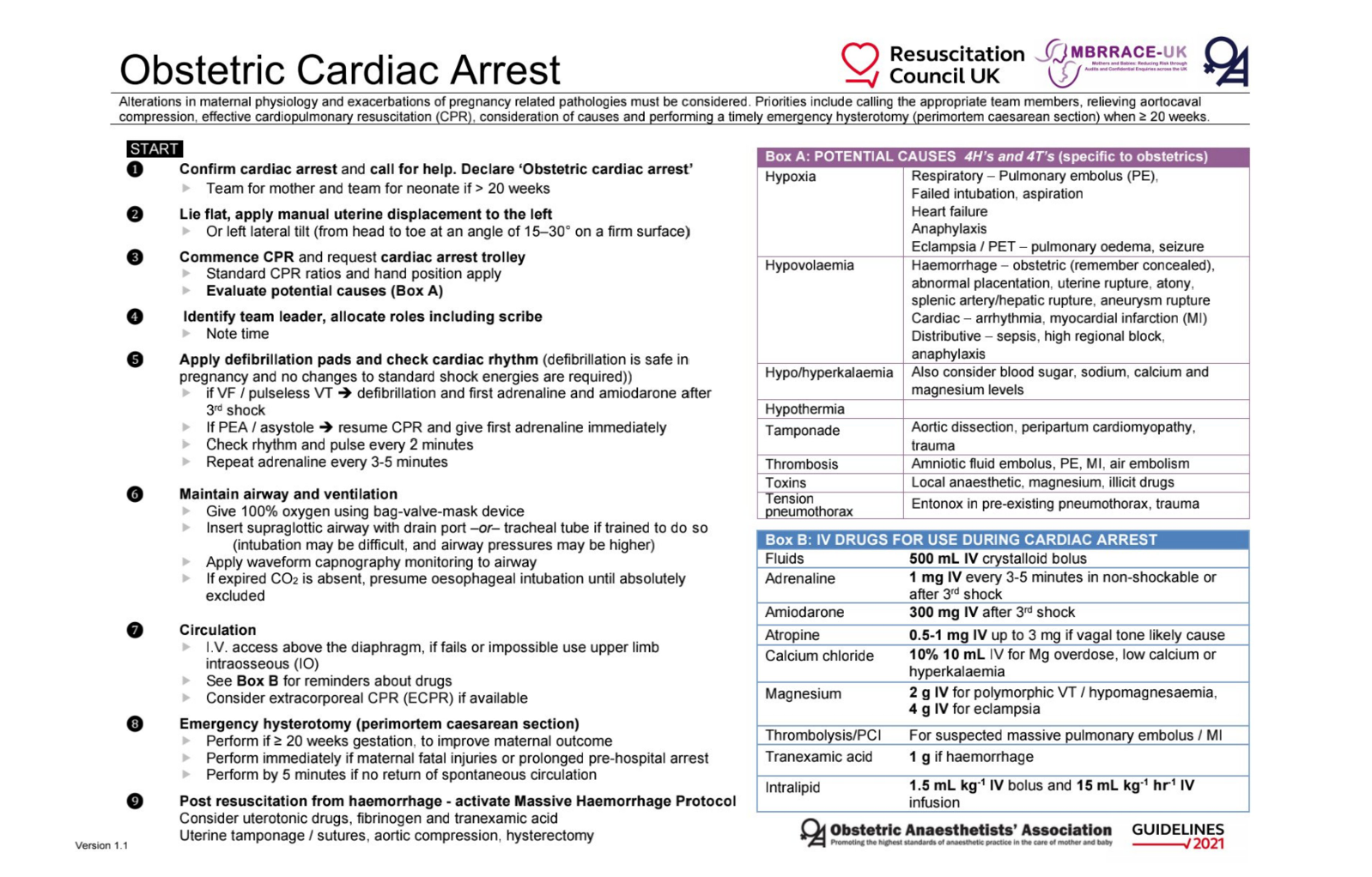
  • Two patients - one resuscitation
  • Optimal maternal resuscitation = best fetal outcome
  • Activate OB, anesthesia, neonatal teams immediately

Critical Modifications

  • Left lateral tilt or manual uterine displacement
  • Higher hand position for compressions
  • Early intubation (difficult airway risk)
  • IV access above diaphragm

Perimortem C-section

  • Prepare immediately for ≥20 weeks gestation
  • Perform if no ROSC within 4 minutes
  • Target delivery within 5 minutes of arrest
  • Vertical midline incision (fastest)

Reversible Causes

  • Hemorrhage: TXA, blood products, uterotonics
  • Eclampsia: MgSO₄ toxicity - calcium gluconate
  • PE: consider thrombolysis
  • Anniotic fluid embolism: supportive care

Common Causes

  • Hemorrhage
  • Preeclampsia/eclampsia
  • Pulmonary embolism
  • Amniotic fluid embolism
  • Sepsis

Cardiac Arrest in Pregnancy

Specialized resuscitation protocol for maternal cardiac arrest


My Image

Two Patients - One Resuscitation!

Optimal maternal resuscitation provides the best chance for fetal survival. Activate obstetric, anesthesia, and neonatal teams immediately.

Physiological Changes in Pregnancy

Cardiovascular

  • ↑ Cardiac output (30-50%)
  • ↑ Blood volume (45%)
  • Peripheral vasodilation

Respiratory

  • ↑ Minute ventilation (50%)
  • ↑ Oxygen consumption
  • Reduced FRC

Mechanical

  • Uterine compression of IVC/aorta
  • Higher diaphragm position
  • Difficult airway risk

Causes of Maternal Arrest

Category Specific Causes
Obstetric Hemorrhage, preeclampsia/eclampsia, amniotic fluid embolism
Cardiac PE, MI, cardiomyopathy, aortic dissection
Other Sepsis, trauma, drug toxicity (MgSO4), anaphylaxis

Prevention: Early left lateral positioning, oxygen, fluid bolus for hypotension, and expert consultation can prevent progression to arrest.

Resuscitation Modifications

1

Positioning

  • Manual uterine displacement (≥20 weeks)
  • Left lateral tilt 15-30° if possible (on firm surface)
  • Higher hand position for compressions
2

Airway

  • Early intubation (higher aspiration risk)
  • Prepare for difficult airway
  • Smaller ETT (6.0-7.0mm), rapid sequence
3

Circulation

  • IV access above diaphragm
  • Standard defibrillation energy
  • Adjust pad placement for breast tissue
4

Perimortem C-section

  • Prepare from onset of arrest (≥20 weeks)
  • Perform if no ROSC within 4 minutes
  • Target delivery within 5 minutes of arrest

Reversible Causes (4Hs & 4Ts)

Hemorrhage

  • Massive transfusion protocol
  • Tranexamic acid 1g IV
  • Uterotonics for atony

Hypertension

  • Eclampsia: MgSO4 4-6g IV
  • Labetalol/hydralazine for severe HTN

Heart

  • PE: consider thrombolysis
  • Amniotic fluid embolism: supportive care

Drugs

  • MgSO4 toxicity: calcium gluconate
  • Local anesthetic toxicity: lipid emulsion

Hemorrhage Management

1

Control Bleeding

  • Direct pressure, uterine massage
  • Bakri balloon, compression sutures
  • Interventional radiology
2

Resuscitation

  • Blood products (1:1:1 ratio)
  • Tranexamic acid 1g IV over 10min
  • Limit crystalloid
3

Uterotonics

  • Oxytocin 5-10 IU IV/IM
  • Misoprostol 800mcg PR
  • Carboprost 250mcg IM

Perimortem Cesarean Section

Time Critical Intervention

Begin preparation immediately for pregnancies ≥20 weeks. Perform if no ROSC within 4 minutes - aim for delivery by 5 minutes.

Team Approach

Obstetrics, anesthesia, neonatology, and ICU must collaborate

Position First

Left tilt or manual displacement before compressions

Airway Alert

Higher aspiration risk - secure airway early

5-Minute Rule

Perimortem C-section within 5 minutes of arrest